RGB Grodan101® logo - Negative Primary Color)

You must have the legal age to enter this website

Are you over 21 years of age?

01

Water content and dry-back

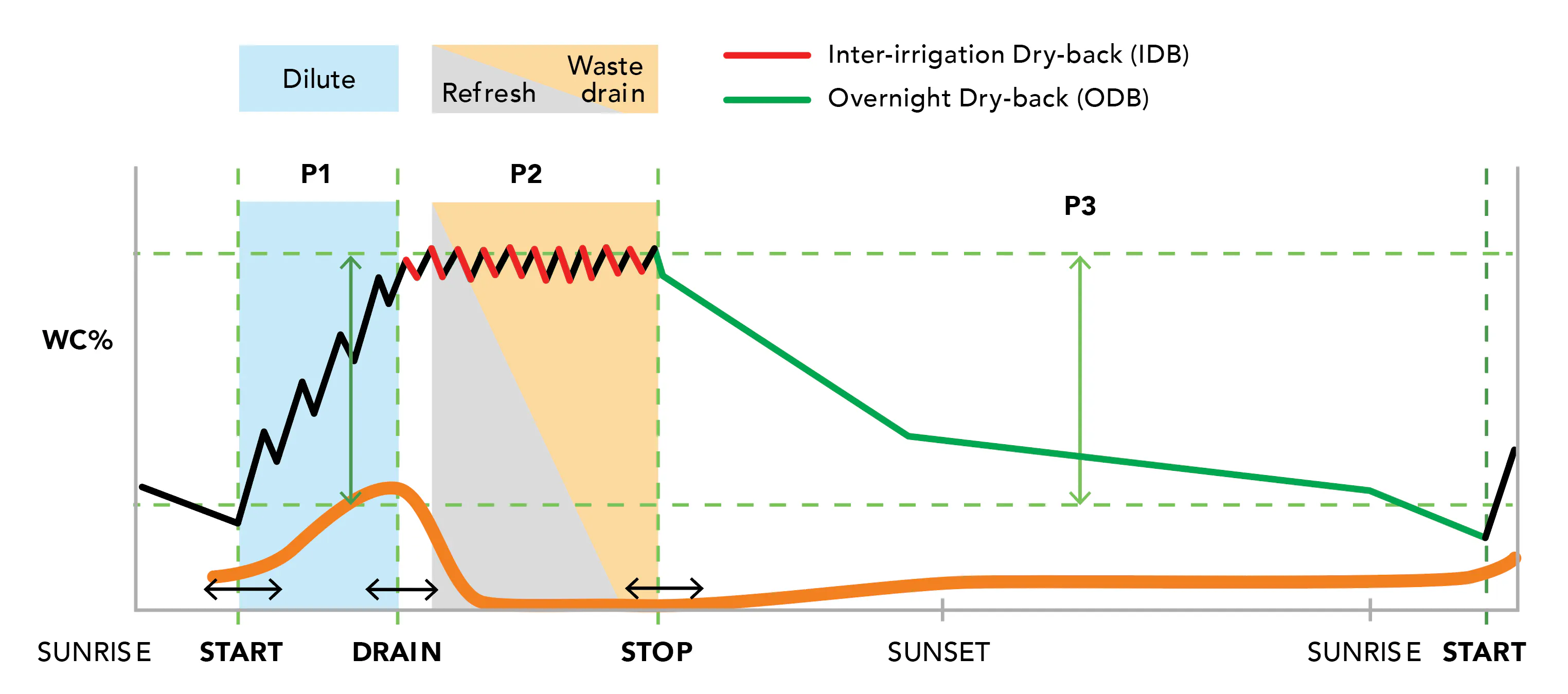
Water content shows how much water is held within the growing media. Tracking changes in water content helps growers evaluate re-saturation, crop demand and dry-back between irrigation events and overnight.

02

Electrical conductivity

Electrical conductivity (EC) reflects the concentration of dissolved nutrients within the root zone. EC should be interpreted alongside water content, irrigation input and drain to understand how irrigation and crop uptake are affecting root-zone conditions.

03

Irrigation timing and drain

Irrigation volume, frequency and start and stop times influence re-saturation, inter-irrigation dry-back, overnight dry-back and nutrient-solution refreshment. Drain provides additional information about irrigation volume and root-zone refreshment, but it should not be evaluated on its own.

04

Root-zone temperature

Root-zone temperature influences root activity and can affect the environment surrounding the roots. Monitoring temperature alongside water content and EC provides a more complete picture of conditions within the growing media.

The Grodan 5-Phase Model is built into GroSens Suite, bringing phase-specific guidance together with the root-zone data growers already monitor.

Compare near real-time water content, EC, root-zone temperature, dry-backs, drain and irrigation activity with phase-specific guidance throughout the crop cycle to support more informed and consistent irrigation decisions.

GroSens page

Frequently asked questions

Why should water content and EC be monitored together?
What is the difference between inter-irrigation and overnight dry-back?
Why is root-zone temperature important?
Can microorganisms develop in stone wool?
Should root-zone targets remain the same throughout the crop cycle?